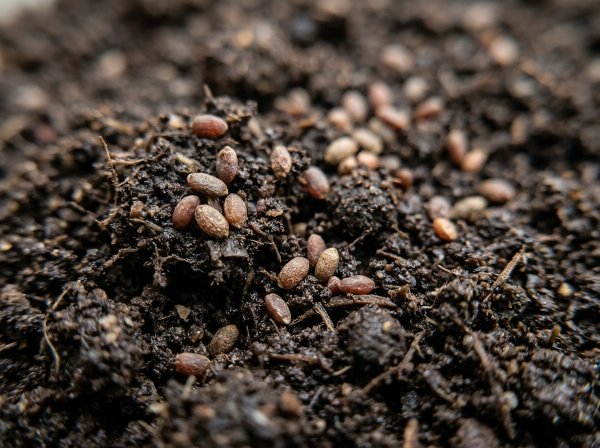
Soil first
Rocket is not demanding, but it is specific. Aim for a free-draining loam with a pH of 6.0–7.0; 6.5 is a sensible target. Below about 5.5, brassica growth slows and clubroot risk (Plasmodiophora brassicae) increases; liming acid ground in autumn is the standard correction. A soil test kit or laboratory test gives the number — guessing from weeds does not. Incorporate well-rotted compost at roughly one 10-litre bucket per square metre rather than a high-nitrogen fertiliser, for reasons covered in File 04.
Temperature and day length
Seed germinates across a wide range — slowly from about 5 °C — but most reliably at soil temperatures of 10–20 °C, emerging in 4–7 days for Eruca and 5–10 days for Diplotaxis. Leaf growth is best at air temperatures of 10–20 °C. Above roughly 25 °C, combined with long days, plants switch to flowering: stems elongate, leaves shrink and pungency climbs.
In a temperate northern-hemisphere garden that translates into two main windows: March to May, and mid-August to September. October to February sowings are possible under glass, a polytunnel or fleece. Midsummer sowings are not impossible, but expect a short cropping window and provide light shade.
Depth, spacing and density
- Eruca: sow about 0.5 cm deep in drills 15–20 cm apart. Thin to 10–15 cm for full leaves, or leave 2–3 cm between plants for baby-leaf cutting.
- Diplotaxis: sow on the surface or no deeper than 0.25 cm; the seed is small. Thin to 15–20 cm.
Firm the drill after sowing so seed contacts moist soil. Crowded rows stay damp at the base and encourage downy mildew, so thinning is a disease measure as much as a yield measure.
Succession: the 2–3 week rule
A single Eruca sowing gives roughly three to five weeks of good leaf before it runs to seed. For a continuous supply, sow a short row every 2–3 weeks through each window. A 1 m row typically supplies one or two salads a week for a small household. Diplotaxis needs fewer sowings: one in spring and one in late summer can cover most of a season.
Containers and cover
Rocket is one of the more forgiving container crops. Use a pot or trough at least 15 cm deep for Eruca and 20 cm for Diplotaxis, with drainage holes and a peat-free multipurpose compost. Containers dry faster than beds, and drought triggers early bolting, so check moisture daily in warm spells. Under cover, ventilate on sunny days: a polytunnel can exceed 30 °C in spring sunshine while outdoor air sits at 15 °C.
Water and feed
Keep soil evenly moist; a working figure is 2–3 cm of water per week from rain and irrigation combined. Irregular watering produces tough, hot leaves. Water at the base in the morning so foliage dries before evening. Rocket needs little supplementary feeding on reasonably fertile soil; excess nitrogen raises leaf nitrate without improving flavour.
Rotation
Treat rocket as a brassica. Avoid following cabbage, kale, radish or turnip in the same bed, and leave at least three to four years between brassica crops where clubroot has been recorded. Rocket fits neatly into gaps after early potatoes or between slower crops such as leeks.
Microgreens
For microgreens, sow Eruca densely on compost or a growing mat and cut at 7–10 days, when the first true leaf appears. Pest exposure is minimal at this stage — see File 03 for what changes once plants are in open ground.