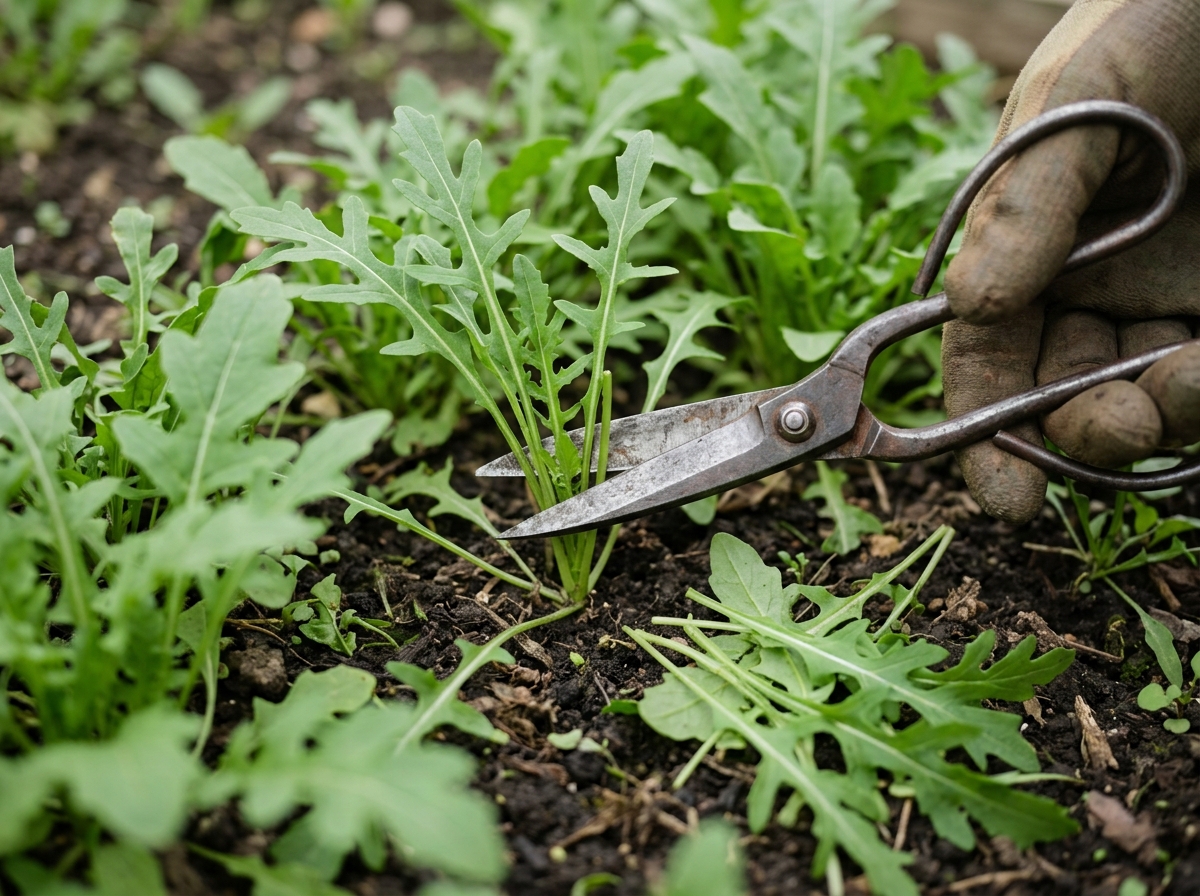
When to cut
Eruca reaches baby-leaf size — leaves 5–10 cm long — in about 21–35 days from sowing in good conditions; Diplotaxis takes 35–50 days. Full-size Eruca leaves of 15–20 cm are ready at around 40 days but become hotter and coarser with age. Watch for the first flower stem: once it appears, leaf quality typically declines within one to two weeks.
Cutting for regrowth
Use clean scissors or a sharp knife and cut 2–3 cm above the crown, leaving the growing point intact. Eruca typically gives two to four cuts before bolting; Diplotaxis regrows repeatedly through a season, and established crowns can resprout the following spring. Alternatively, pick outer leaves individually and leave the centre — slower, but it extends each plant's productive life.
Time of day: a genuine trade-off
Morning harvest gives turgid, cool leaves that store longer. Leaf nitrate, however, tends to be highest after periods of low light and falls during a bright day as the plant assimilates it. For home growers the practical compromise is to harvest in late morning on a bright day and cool the leaves immediately.
Cooling and storage
Commercial practice holds rocket at 0–1 °C and 95–98% relative humidity, giving roughly 7–10 days of shelf life. In a domestic fridge running at 3–5 °C, expect 3–5 days. Wash in cold water, spin dry and store in a closed container lined with paper towel. Keep it away from ethylene-producing fruit such as apples, pears and tomatoes, which accelerate yellowing.
Nitrate in context
Leafy crops accumulate nitrate, and rocket ranks among the highest. Commission Regulation (EU) 2023/915 sets maximum levels for marketed rocket: 7,000 mg NO₃/kg for rocket harvested from 1 October to 31 March, and 6,000 mg/kg for rocket harvested from 1 April to 30 September. The higher winter figure reflects lower light. These limits apply to commercial produce, not garden beds, but they show the scale. Garden levels fall with modest nitrogen feeding, good light and avoiding harvest after several dull days.
Nutrition figures
USDA FoodData Central lists raw arugula per 100 g at 25 kcal, 2.58 g protein, 1.6 g fibre, 160 mg calcium, 369 mg potassium, 15 mg vitamin C, 97 µg folate and 108.6 µg vitamin K. A side-salad portion is closer to 20–30 g, so scale accordingly: 25 g supplies roughly 27 µg vitamin K. People taking warfarin or similar anticoagulants should keep vitamin K intake consistent and discuss dietary changes with their clinician.
Flowers, pods and seed saving
Eruca flowers are edible, with a milder version of the leaf flavour; Diplotaxis flowers are smaller and sharper. Young green pods can be eaten too. To save seed, leave a few strong plants until pods turn straw-coloured, then cut the stems and dry them in a paper bag. Rocket is insect-pollinated and different Eruca cultivars cross readily, so isolate cultivars if you want them true to type. Stored cool and dry, seed typically remains viable for around three to four years.
Quick reference
- Baby leaf: 5–10 cm.
- Cut height: 2–3 cm above the crown.
- Cuts: Eruca 2–4; Diplotaxis repeated through the season.
- Storage: 0–1 °C at 95–98% RH.
For cultivar choice that sets the flavour baseline, return to File 01.